The legwork behind social work.
Patients who are tracked and heard do better. We build the AI that does the tracking.
We’re looking for pilot participantsThen the social worker does therapeutic interventions, not referrals.
- TransplantCheckDialysis units
- HealthcareCheckOffices, Medicaid navigators, non-profits
- VibeCheckMental health practices
Trust and security
Built to HIPAA and SOC 2 technical standards. Your records stay with you, and we publish what we have built and checked.
- Your machineAll products | Clinic-owned
Patient records stay on the clinic’s own machine
No patient charts are stored in our cloud.
- 54 testsAll products | Checked 2026-11-24
54 automated tests run on every change
They cover access control, private journals, login limits and clinical workflows.
- Two-factorAll products | Staff sign-in
Two-factor sign-in for staff is built in
- Audit logAll products | Tamper-evident
Sign-ins and chart views are logged in a chain that shows tampering
- EncryptedAll products | Backups
Clinic backups are encrypted, with a restore check
- ScannedAll products | Every change
Code is scanned for known security flaws before it ships
- PlannedAll products | SOC 2 audit
An independent SOC 2 audit is planned
We have not had one yet, and we never call ourselves certified.
Improved engagement
People stay connected between appointments, and their care team hears from them. This is the research we build on.
- 34% vs 41%Cancer care | Randomized trial
Check-ins that reached the nurse meant fewer emergency visits
766 patients reported symptoms between visits. Quality of life improved for 34%, against 18% with usual care. Basch, 2016.
- 17 studiesTherapy | Meta-analysis
Work between sessions goes with better outcomes
2,312 clients in cognitive behavior therapy. Those who did the between-session work did better, at the end and at follow-up. Kazantzis, 2016.
- Fewer no-showsOutpatient clinics | Systematic review
Reminders and navigator calls cut missed appointments
Across seven randomized trials, including mental health clinics. Oikonomidi, 2023.
- 9 of 13Primary care | Cohort study
More engaged patients had better outcomes and lower costs two years on
When engagement rose, outcomes followed. Hibbard, 2015.
- 18 trialsDepression | Meta-analysis
Smartphone apps reduced depression symptoms more than controls
3,414 people across 18 randomized trials. Firth, 2017.
Goal setting
People choose their own goals and see how far they have come.
- 60% vs 48%Medicaid and uninsured | Randomized trial
A plan built around the patient’s own goals got more people to follow-up care
446 hospital patients. Community health workers made action plans for each patient’s stated goals. Kangovi, 2014.
- 74% vs 29%Depression | Randomized trial
Tracking scores and acting on them nearly tripled remission
120 outpatients. Care guided by regular measurement, against standard care. Guo, 2015.
- 58 studiesTherapy | Meta-analysis
Showing therapists their clients’ own scores lowered dropout
21,699 patients. A small improvement in symptoms and fewer people leaving care. de Jong, 2021.
Resource navigation
The software finds the resource and does the legwork until it lands: the ride booked, the application filed, the record obtained.
- 1,809 familiesSafety-net clinics | Randomized trial
In-person help beat a printed list of services
Families who got help reaching services reported fewer unmet needs and healthier children four months later. Gottlieb, 2016.
- 3.5 vs 1.6Dialysis | Randomized trial
Navigators more than doubled the transplant steps patients finished
Patients with a trained navigator completed 3.5 steps toward a transplant, against 1.6 without. Sullivan, 2012.
- 3.3×Transplant | Randomized trial
After 500 days, navigated patients were 3.3 times more likely to be waitlisted
The gap opened with time: 75% against 25%. Basu, 2018.
Resiliency
People build toward standing on their own: resilient, self-sufficient, independent, and doing well in their community.
- 11 trialsResilience | Meta-analysis
Resilience can be taught
Across 11 randomized trials, resilience programmes had a moderate positive effect. Joyce, 2018.
- 18 months onMental health and housing | Randomized trial
Short-term case management that hands over to the community kept people housed
150 adults leaving psychiatric hospital. Nine months of support built to be handed over. Less homelessness a year and a half later. Herman, 2011.
- 952 patientsChronic illness | Randomized trial
Teaching people to manage their own condition meant fewer days in hospital
Better health and fewer hospitalizations at six months. Lorig, 1999.
- 22 unitsDialysis | Before-and-after study
Dialysis social workers ran a coping programme after Katrina and Rita
69 patients in 22 Louisiana units rated their health and social functioning higher afterwards. No control group. Weiner, 2010.
Therapeutic care
When the legwork is handled, the social worker’s time goes back to therapy. The decision model sends anything about how a person thinks or feels to a licensed clinician, and crisis language to a person.
- 79 trialsDepression and anxiety | Cochrane review
Team-based care improved depression and anxiety
24,308 participants. Better than usual care in the short, medium and long term. Archer, 2012.
- 89% vs 38%Dialysis | Randomized trial
Therapy given at the dialysis chair lifted depression
Of patients depressed at the start, 89% were not depressed after three months, against 38% on the wait list. Cukor, 2014.
- 87%Dialysis | Pilot randomized trial
A renal social worker delivered the therapy
Six weeks of problem-solving therapy. 87% of patients said it helped them solve problems and cope. Erdley, 2014.
- 160 patientsDialysis | Randomized trial
Technology-assisted therapy eased fatigue and pain
Weekly sessions by telehealth in the unit or at home. Gains held at six months. Jhamb, 2023.
AI integration
AI your team stays in charge of, built to HIPAA technical standards. We train our own small decision models, and they run on your own machine. Larger AI is optional, starts switched off, and only ever sees text with the identifiers removed. We also build custom solutions.
- Small modelsDecision models | Our own
Small decision models that do one job each
Laya reads a person’s own words and sorts them into 18 kinds of support need. It is small enough to run on an ordinary processor.
- Trained in-houseTraining | Our own
We train the models ourselves
Each release ships with a training report and a model card, and the model file is verified every time it loads.
- On your machineControl | Local
The decision is made on your own machine
No outside AI service is needed for it.
- Off by defaultHIPAA technical standards | Optional AI
Larger AI is optional and starts switched off
A clinic turns it on, chooses where it runs, and signs its own agreement if that is outside its walls.
- Scrubbed firstHIPAA technical standards | Identifiers
Names, numbers, dates, emails and links come out before any text reaches AI
- Your addressControl | Where it runs
Optional AI runs where you say
On your own machine, or at a secure address you choose. Nothing else is accepted.
- Source keptNotes | Checkable
An AI-polished note keeps the original underneath it
So a person can always check what the AI changed.
- ConsultingMWS Consulting Studio | Outside healthcare
Not in healthcare? Our consulting studio does AI and websites for small businesses
Built with you
You see the field change before anyone else does. Tell us, and the software changes with it.
Talk to MatthewCustom solutions
If your programme does not fit one of our products, we build one for it.
Add-ons
A form, a report or a workflow added to a product you already use.
Always improving
When a rule or a measure changes in your field, we want the software to change at the same pace.
Where we will build next, with the provider
We have not built these yet. Each line is a published study of the same kind of follow-through, in that setting.
Substance use programmes
An app that kept patients and counselors in contact after residential treatment: 1.39 against 2.75 risky drinking days. Randomized, 349 patients. Gustafson 2014
Hospital case management
Workers who built a plan around the patient’s own goals: timely primary care after discharge for 60.0%, against 47.9%. Randomized, 446 patients. Kangovi 2014
Community health centers
Help reaching services, with follow-up calls, lowered families’ social needs more than a printed list did. 1,809 families. Gottlieb 2016
Nursing homes and long-term care
Off-hours doctor cover by telemedicine could reduce hospital trips, but only in the homes that used it. 11 nursing homes. Grabowski 2014
Home health and hospice
Problem-solving therapy for hospice caregivers worked as well by video call as face to face. Randomized, 126 caregivers. Demiris 2012
Child and family services
No trial results yet. A randomized trial of a foster-care family navigator with a digital tool has published its plan. Tolou-Shams 2023
Housing and homeless services
Nine months of case management built to hand over to community supports: less homelessness 18 months on. Randomized, 150 adults. Herman 2011
Aging services
Home visits built around the person’s own goals cut disability scores by 30% at five months. Randomized, 300 adults 65 and older. Szanton 2019
79%of U.S. adults 65 and older own a smartphone.
89%of U.S. adults 65 and older use the internet. In 2000 it was 14%.
Owning a phone is not the same as using health software: in a 2017 national sample, 74% of older adults reported no patient portal use. So our tools keep a person on the other end. Pew Research Center, 2026 · Pew, internet use · Burgdorf 2023
About Mental Wealth Solutions
Nobody goes into social work to do referrals.
I’m Matthew. I’m a licensed clinical social worker. I was a dialysis social worker, and then I ran social work for 13 dialysis clinics. I was good at it, and I was a hot mess.
Here’s the part of the job nobody warns you about. You train to help people change. Then you get hired and spend your days chasing things: a ride, a form, a record that never showed up. Finding a referral and staying on it until it lands takes forever. It matters. It’s also not why any of us did this.
And the real work happens when we’re not there. Between appointments is where people either keep going or quietly drop off. I couldn’t be in that gap. Nobody can.
I went looking for software that would do that part. I couldn’t buy it. So we built it.
How it works, in plain terms
It stays in touch between appointments. People tell it what they need, in their own words, on their own time.
It knows what it is not. A decision model reads every request and sorts it. If it’s a concrete thing, like a ride, an application or a record, the software does the legwork and helps the person go get it themselves. If it’s about how someone thinks or feels, it stops and hands it to a licensed clinician. It does not do therapy. That’s our job. Anything that sounds like a crisis goes straight to a person.
It shows people their own progress. You keep going when you can see how far you’ve come.
It’s built to be needed less. The point isn’t to hook anyone on an app. The point is a person who gets past the depression, the anxiety and the learned helplessness, stands on their own, and starts to flourish in their community.
When the legwork is handled, the social worker gets to do what we trained for.
What I can and can’t tell you
The research on staying engaged is strong. In randomized trials, check-ins that reached the care team improved quality of life and cut emergency visits (Basch 2016), and navigators who tracked every step more than doubled the transplant steps patients completed (Sullivan 2012). We don’t have results of our own yet. That’s what the pilots are for.
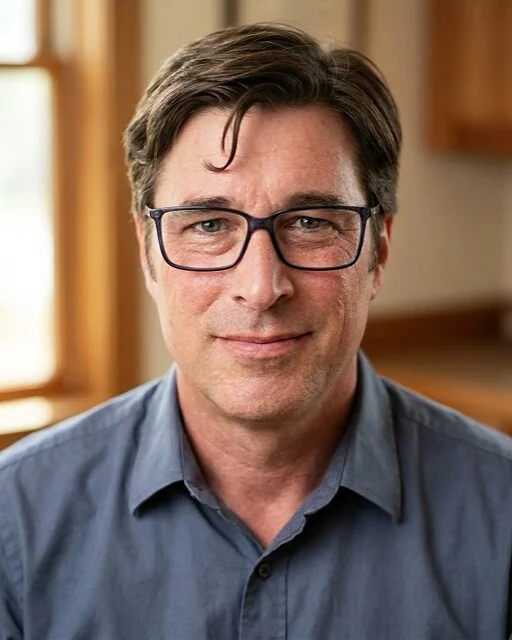 Matthew Sexton, LCSW
Founder, Mental Wealth Solutions
About the company
- Who founded Mental Wealth Solutions?
- Matthew Sexton, LCSW, NATC founded Mental Wealth Solutions, Inc. He has been in clinical work since 2015, including disaster case management, forensic ACT, addiction outpatient, a dialysis social-work directorship overseeing 13 clinics, and Fortune-500 EAP work. About the founder.
- What is VibeCheck.luxury?
- VibeCheck.luxury, our practice software, still works. We do not host it today, because hosting costs more than small practices can pay. We would like to release it as open source, so a practice can run it itself.
- What is Couch Commons?
- Couch Commons is a therapist directory with dated license checks and no paid placement. Mental Wealth Solutions, Inc. operates it at couchcommons.com. The directory itself shows who is listed today.
- What does patent 64/059,214 cover?
- U.S. Provisional Patent Application 64/059,214, filed May 6, 2026, covers persona-mediated companion architecture, tiered cost-vs-safety routing, per-service consent partitioning, closed-loop referral telemetry, and cross-modality adherence tracking. The status is patent pending. No patent has been granted. The patent page.
- Is this the Missouri practice?
- No. Mental Wealth Solutions, Inc. is not Mental Wealth Solutions, LLC of Saint Charles, Missouri. They are separate, unrelated organizations.
- Is the clinical practice the same company?
- No. Matthew Sexton LCSW PLLC is the founder's clinical practice and a separate entity. The platform is used there first, but the practice is not the product and is not part of Mental Wealth Solutions, Inc. matthewsextonlcswpllc.org.
- What is the R.A.V.E.S. framework?
- R.A.V.E.S. is Recognition, Alignment, Value, Evidence, Sovereignty, a five-domain framework by Matthew Sexton, LCSW. The full framework.
We’re looking for pilot participants.
Talk to Matthew