Immunosuppression adherence drops at month six. Depression runs 25% at year one. The transplant team stops watching at month three. This is not a mental-health add-on. It is a graft-survival problem.
What this covers: Post-kidney-transplant immunosuppression nonadherence rates and their relationship to depression, social support deficits, and late acute rejection. The data is population-level, drawn from USRDS, peer-reviewed transplant psychiatry literature, and randomized trials in hemodialysis populations. This analysis is for transplant recipients, caregivers, and the clinicians who coordinate their care. It is not clinical advice.
Key takeaways
- Immunosuppressant nonadherence averages 23 cases per 100 transplant patients per year across solid-organ recipients, with psychosocial risk factors as the strongest predictors.1
- Depression and health-related quality of life improve significantly with kidney transplantation but a substantial subgroup carries clinically significant depressive symptoms through year one.2
- Low social support is associated with a pooled odds ratio of 1.65 for medication nonadherence post-transplant.3
- Most transplant programs concentrate active follow-up in months one through three. The month-six adherence drop happens in a monitoring gap.
- The SIPAT captures psychosocial risk pretransplant. It does not monitor post-transplant drift. No equivalent instrument exists in standard post-transplant care.
- Frailty at transplant is independently associated with a 61% increased risk of early hospital readmission within 30 days.4
The Nine-Step Ladder Nobody Talks About
Transplant gets framed as an endpoint. Wait long enough, survive the workup, get the organ, recover, live longer. The Wolfe et al. data from the New England Journal of Medicine established decades ago that deceased-donor kidney transplant recipients gain a median of 10 years of life expectancy compared to matched patients who remain on dialysis.5 That number is real. It is also not the whole story.
Transplant is not an endpoint. It is a transfer of burden. The dialysis burden — three sessions a week, fluid restrictions, the machine — gets traded for a different burden: daily immunosuppressant medications, quarterly labs, clinic visits, an immune system that has been pharmacologically suppressed for the rest of the recipient’s life. The burden is smaller. The vigilance required is permanent.
There is a clinical progression that the transplant team tracks obsessively in months one through three and then largely stops tracking. It runs roughly like this:
Pre-listing. The candidate undergoes psychosocial evaluation — in most programs using the Stanford Integrated Psychosocial Assessment for Transplant (SIPAT) or a similar instrument.6 The evaluation generates a score. The social worker or psychologist presents it to the transplant selection committee. A listing decision gets made.
Waitlist. The candidate waits. Median waiting time for a deceased-donor kidney in the U.S. runs three to five years as of the 2024 USRDS Annual Data Report.7 During that time, their dialysis burden continues. Anxiety and depression prevalence in the hemodialysis population runs 12% to 52% depending on the screening instrument and the study methodology.8
Match. The call comes. The candidate goes to surgery. The surgical team and transplant nurses track everything.
Month one. Acute rejection risk is highest. The team is watching. Labs twice a week. Clinic visits twice a week. The transplant coordinator is reachable.
Month three. Labs have stabilized. Visits drop to monthly. The coordinator is less reachable. The acute risk window is considered closed.
Month six. The team stops watching. The recipient has been told they are doing well. Their tacrolimus dose has been titrated down. They feel, compared to dialysis, dramatically better. Some of them stop taking the afternoon pill because they forgot, then forgot again, then decided it probably didn’t matter that much. This is the month-six adherence drop.
Year one. Depression prevalence in the post-transplant population has not resolved for a meaningful subgroup. The Hermanns et al. 2024 prospective study followed 99 kidney transplant recipients from waitlist through 12 months post-transplant and found that while BDI-II scores improved significantly overall (median 10 pre-transplant to 5 post-transplant, p less than 0.001), the improvement was not uniform.2 Younger patients gained more. Some patients showed persistent or worsening depression at the 12-month mark.
Late acute rejection signal. Lab values start shifting. Creatinine creeps. The trough level is low. The team now has a problem that adherence monitoring three months earlier might have caught.
Graft loss. Not inevitable. But the pathway from month-six adherence drop to late acute rejection to accelerated graft loss is documented. It is not theoretical.
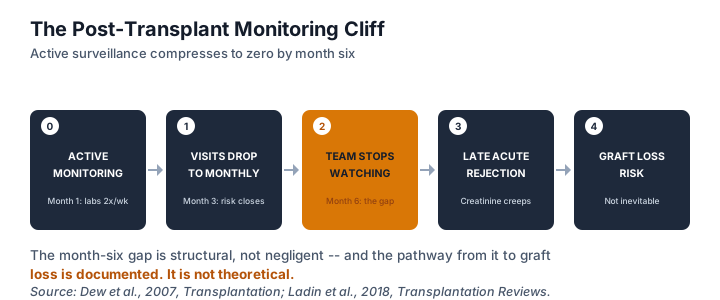
The core gap: pretransplant evaluation is standardized, post-transplant psychosocial monitoring is not
OPTN policy requires psychosocial evaluation as part of listing. There is no equivalent OPTN policy requirement for longitudinal post-transplant psychosocial monitoring. Programs vary widely. Most concentrate follow-up in the acute risk window. The chronic phase is managed by nephrology, not transplant social work.
What the SIPAT Measures and What It Misses
The SIPAT was developed at Stanford and validated across solid-organ transplant populations. It covers 18 domains organized into four subscales: patient readiness and illness management; social support system; psychological stability and psychopathology; and lifestyle and drug or alcohol use. A higher score indicates higher psychosocial risk. Programs use it as a listing factor, sometimes as a relative contraindication.
The Chernyak et al. 2021 study applied SIPAT to 147 lung transplant candidates and found that nearly half had relative or absolute psychosocial contraindications based on their scores.6 That is not a lung-specific finding. Kidney transplant data from single-center cohorts shows similar distributions.
The SIPAT has two structural limitations that matter for post-transplant outcomes. First, it is a pretransplant snapshot. It captures where the patient is at evaluation. It does not capture where they will be at month six when their dose has been titrated and the coordinator has stopped calling. Second, the social support subscale captures perceived support at the time of evaluation. Social support networks deteriorate under chronic illness burden. A caregiver who was present and engaged at evaluation may have burned out six months into the post-transplant recovery period.
The Ladin et al. systematic review covering 26 studies and over 7,000 solid-organ transplant recipients quantified this relationship directly. Patients with low social support had a pooled odds ratio of 1.65 for medication nonadherence, with worse graft survival, higher rates of acute rejection, and elevated psychiatric symptom burden as downstream outcomes.3
1.65 — odds ratio for medication nonadherence with low social support. Pooled from a systematic review and meta-analysis of 26 studies covering 7,000+ solid-organ transplant recipients. Social support deficits were independently associated with worse graft survival, higher acute rejection rates, and elevated psychiatric symptom burden. Ladin et al., 2018, Transplantation Reviews. DOI: 10.1016/j.trre.2017.04.001
The Depression-Adherence Loop
Depression and immunosuppressant nonadherence are not parallel problems. They are a feedback loop.
Depression reduces executive function, motivation, and the behavioral capacity to maintain complex medication regimens. Nonadherence — particularly the incremental kind, the missed afternoon doses, the skipped clinic visit — does not produce an immediate consequence in most recipients. The rejection signal is weeks or months away. The feedback loop between the behavior and the consequence is too long to activate natural compliance behavior.
The Dew et al. 2007 meta-analysis of 147 studies quantified average immunosuppressant nonadherence rates at 23 cases per 100 patients per year across solid-organ recipients.1 Depression, anxiety, poor social support, and substance use were the strongest and most consistent psychosocial predictors. These are not surprising findings. They confirm what transplant social workers have known from clinical practice for decades. The problem is that knowing it and building monitoring workflows around it are different things.
The Cukor et al. 2014 randomized controlled trial from JASN is the most directly relevant evidence base.9 It randomized 65 hemodialysis patients with comorbid depression to chairside CBT delivered during dialysis sessions versus usual care. The CBT arm showed significant reductions in BDI-II scores, sustained at three-month follow-up. But the finding that matters most for adherence: interdialytic weight gain — a direct measure of fluid adherence — improved in the CBT arm relative to control. Treating the depression improved a measurable adherence metric. The pathway is not just theoretical. It has been demonstrated in an RCT.
The dialysis population and the post-transplant population are not identical. But the mechanism is. Depression degrades the behavioral capacity for adherence. Treating depression improves adherence. The question is whether the monitoring infrastructure exists to identify the problem in time.
23 — nonadherence cases per 100 transplant patients per year. Meta-analysis pooling 147 studies of post-transplant adherence. Psychosocial risk factors — depression, anxiety, low social support, substance use — were the strongest predictors. Nonadherence was substantially higher for clinic-attendance and diet domains than for medication-taking, though medication nonadherence remained clinically significant. Dew et al., 2007, Transplantation. PMID: 19461370. DOI: 10.1097/TP.0b013e3181a440ae
Why the Workflow Stops at Month Three
This is structural, not negligent. Transplant program performance metrics tracked by SRTR and monitored by OPTN concentrate risk-period surveillance in the first 30 and 90 days post-transplant. That is the window where surgical complications, acute rejection episodes, and opportunistic infections are highest probability. The performance metrics that programs are accountable for — and that determine SRTR performance ratings — are concentrated in that window.
Once a patient passes the acute risk window, active follow-up compresses. The transplant coordinator’s caseload is large. Stable patients get quarterly clinic visits and lab monitoring. Unstable labs trigger escalated follow-up. Depression and adherence drift do not typically show up in labs until the downstream consequences have already compounded.
This is not a criticism of transplant teams. They are working within a reimbursement and performance-measurement structure that incentivizes acute risk management and does not reimburse chronic psychosocial monitoring at a level that makes it operationally sustainable for most programs.
The result is a monitoring gap that is predictable, documented in the literature, and rarely addressed by the infrastructure of the programs delivering transplant care.
The frailty overlay: frailty compounds the adherence and readmission risk in the first 30 days
McAdams-DeMarco et al. 2013 found that among 383 kidney transplant recipients assessed with the Fried frailty phenotype, frail recipients had a 61% increased risk of early hospital readmission within 30 days of transplant. Frailty is a pretransplant variable that the social work and medical team can identify. It is also a predictor of the post-transplant monitoring intensity required.
The Distance Variable
Geographic access compounds everything. McPherson et al. 2020, studying transplant access in the southeastern U.S., found that distance to transplant center was independently associated with delayed access to early steps in the kidney transplantation process.10 Distance is not just a listing barrier. It is a monitoring barrier post-transplant. A recipient who lives two hours from the transplant center is less likely to make an in-person clinic visit that is not strictly required. That missed visit is a missed opportunity to screen for adherence drift and depression.
The USRDS 2024 Annual Data Report puts the U.S. ESRD population at approximately 808,000 prevalent patients on dialysis or with a functioning transplant at the end of 2022, with transplant waitlist near 89,000 candidates.7 Geographic distribution of that population does not map neatly onto the distribution of transplant centers. The distance variable is not evenly distributed.
89K — kidney transplant waitlist candidates (end of 2022). The U.S. transplant waitlist sat near 89,000 candidates with median wait times of 3 to 5 years for deceased-donor recipients. Transplant volume has not kept pace with ESRD incidence. The bottleneck is not only organ supply. It is also evaluation throughput and geographic access. USRDS 2024 Annual Data Report. National Institutes of Health, NIDDK.
What Needs to Change
The pretransplant evaluation system works as a listing filter. That is not its only potential function. SIPAT data and the psychosocial risk profile established at listing could serve as the baseline for a longitudinal monitoring protocol. Patients who scored high on the psychological stability or social support subscales at listing are the highest-risk subgroup for post-transplant adherence drift and depression.
Most programs do not use SIPAT data that way. It gets generated, presented to the selection committee, and filed. The same social worker who conducted the evaluation typically has no standing protocol for re-engaging with the patient at month six.
Three structural changes would close the monitoring gap without requiring new resources at most programs:
Risk-stratified post-transplant follow-up intervals. Recipients who scored above threshold on SIPAT psychological stability or social support subscales receive a structured psychosocial check-in at months three, six, and twelve — not just a clinic visit where labs get reviewed. The check-in uses a standardized screen: PHQ-9 for depression, a brief adherence measure, and a social support probe. This is a 15-minute addition to an existing clinic visit.
Caregiver monitoring alongside recipient monitoring. Caregiver burnout at month six is a predictor of recipient adherence failure. The Ladin et al. data is clear on the social support relationship to outcomes. Screening caregivers as part of the post-transplant monitoring protocol is not standard. It should be.
Closed-loop referral when screens are positive. Screening for depression and flagging it in the chart is not the same as connecting the patient to behavioral health. Most transplant programs do not have a closed-loop referral workflow that gets a positive PHQ-9 screen to an actual mental health appointment within a clinically relevant timeframe. The screen is only useful if the referral pathway is operational.
Methodology note
All outcome statistics in this post are drawn from peer-reviewed literature, the USRDS 2024 Annual Data Report, and OPTN data. Transplant-specific statistics cite transplant or nephrology journals (AJT, JASN, CJASN, Transplantation, Kidney360, Transplantation Reviews). No statistics are drawn from non-peer-reviewed sources. TransplantCheck has not yet enrolled clinical tenants; no platform-specific outcome claims are made here. Baseline rates cited reflect published population-level data only.
Founder note
“I worked in transplant social work for years. The SIPAT score went into the chart. The selection committee discussed it. The patient got listed or didn’t. Nobody had a protocol for what happened to that psychosocial risk profile at month six. The gap wasn’t a people problem. The people were working hard. It was a workflow problem. Workflows are solvable.”
— Matthew Sexton, LCSW, founder of TransplantCheck
What Closed-Loop Post-Transplant Monitoring Looks Like vs. the Status Quo
| Capability | Status quo (most programs) | Closed-loop monitoring |
|---|---|---|
| Psychosocial screen at month 6 | Rarely structured | PHQ-9 + adherence probe + social support check |
| SIPAT data reuse post-transplant | Filed, not re-used | Baseline for risk-stratified follow-up intervals |
| Caregiver screening | Not standard | Zarit / caregiver burden probe at 3- and 6-month visits |
| Referral when screen positive | Ad hoc, variable | Closed-loop referral within 5 business days |
| Adherence monitoring between labs | Not systematically tracked | Brief BAASIS-style probe at each visit |
| Distance-adjusted follow-up | Same frequency regardless of distance | Telehealth check-in for recipients greater than 60 miles out |
Common questions
When does immunosuppression adherence typically drop after kidney transplant?
The evidence consistently identifies month six as the primary inflection point for adherence decline. The Dew et al. 2007 meta-analysis of 147 studies found average immunosuppressant nonadherence rates of approximately 23 cases per 100 patients per year across solid-organ recipients, with psychosocial risk factors — depression, poor social support, anxiety — as the strongest predictors.1 The transplant team’s active follow-up typically compresses between months one and three, leaving the month-six window unmonitored at most centers.
How common is depression after kidney transplant?
A 2024 prospective longitudinal study by Hermanns et al. published in Kidney360 tracked 99 kidney transplant patients from waitlist through 12 months post-transplant using the Beck Depression Inventory-II. Median BDI-II scores improved significantly (median 10 pre-transplant to 5 post-transplant, p less than 0.001), but the improvement was not uniform. Prior transplant psychiatry literature places post-transplant depression prevalence at 10 to 30 percent at various time points, with elevated risk concentrated in the six-to-twelve-month window.2
Does depression after transplant affect graft survival?
Yes. Depression is not a parallel problem — it is a direct graft-survival variable. The Ladin et al. 2018 systematic review covering 26 studies and more than 7,000 solid-organ transplant recipients found that low social support — a strong predictor and consequence of depression — was associated with a pooled odds ratio of 1.65 for medication nonadherence. Nonadherence is the proximal cause of late acute rejection. Late acute rejection is the proximal cause of graft loss.3
What is the SIPAT and does it predict post-transplant adherence?
The Stanford Integrated Psychosocial Assessment for Transplant (SIPAT) is a structured 18-domain evaluation instrument used during pretransplant candidate evaluation. It is validated across solid-organ transplant populations. The Chernyak et al. 2021 study found that nearly half of 147 lung transplant candidates had relative or absolute psychosocial contraindications on SIPAT — a proportion broadly consistent with kidney transplant data.6 The SIPAT is a pretransplant snapshot. It does not monitor post-transplant drift.
Why does the transplant team stop watching after month three?
It is structural. Transplant program performance metrics tracked by SRTR and CMS concentrate risk-period surveillance in the first 30 and 90 days post-transplant — where surgical complications, acute rejection, and infection risk are highest. Once the patient passes the acute risk window, follow-up frequency drops to reflect the monitoring priorities of the chronic phase. Psychosocial follow-up is rarely part of the standing protocol and rarely reimbursed at a level that incentivizes it.
What should a transplant recipient do if they feel depressed at month six or later?
Tell your transplant coordinator or nephrologist directly. Use the phrase: “What is your workflow when a recipient screens positive for depression?” Most programs do not have a standing protocol for post-month-three psychosocial follow-up. Naming the gap specifically is the fastest route to an actual referral. If you are in crisis: call or text 988. Emergency: 911. NKF Cares: 1-855-NKF-CARES (1-855-653-2273).
About the author
Matthew Sexton, LCSW. Licensed Clinical Social Worker. Transplant social work and 13 dialysis clinics. Founder, TransplantCheck. He writes at the intersection of kidney care, psychosocial systems gaps, and patient navigation infrastructure. All clinical opinions expressed are population-level analysis, not individual clinical advice. matthewsextonlcswpllc.org
If you run a dialysis center, transplant program, or nephrology service line
TransplantCheck is white-label patient-navigation infrastructure for kidney care. SIPAT administration, KDQOL-36 scoring, post-transplant adherence monitoring, and closed-loop referral — all in a single tenant deploy under your brand, under your BAA, on existing AWS infrastructure. Tenant deploy in 48 hours.
Book a 30-minute walkthrough →
Important: This post is educational and informational. It is not clinical advice and does not establish a provider-patient or therapist-client relationship. Population-level statistics and clinical system analysis are provided to inform patients, caregivers, and clinicians about documented patterns in the nephrology and transplant literature. Individual medical decisions should be made in consultation with qualified transplant and nephrology professionals. If you are in crisis: call or text 988. Emergency services: 911. NKF Cares helpline: 1-855-NKF-CARES (1-855-653-2273).
Footnotes
-
Dew MA, DiMartini AF, De Vito Dabbs A, et al. Rates and risk factors for nonadherence to the medical regimen after adult solid organ transplantation. Transplantation. 2007;83(7):858-873. PMID: 19461370. DOI: 10.1097/TP.0b013e3181a440ae ↩ ↩2 ↩3
-
Hermanns CL, Young K, Parks A, et al. A Prospective Study of Depression and Quality of Life after Kidney Transplantation. Kidney360. 2024. PMID: 39115860. DOI: 10.34067/KID.0000000000000538 ↩ ↩2 ↩3
-
Ladin K, Daniels A, Osani M, Bannuru RR. Is social support associated with post-transplant medication adherence and outcomes? A systematic review and meta-analysis. Transplantation Reviews. 2018;32(1):16-28. PMID: 28495070. DOI: 10.1016/j.trre.2017.04.001 ↩ ↩2 ↩3
-
McAdams-DeMarco MA, Law A, Salter ML, et al. Frailty and early hospital readmission after kidney transplantation. American Journal of Transplantation. 2013;13(8):2091-2095. PMID: 23834327. DOI: 10.1111/ajt.12300 ↩
-
Wolfe RA, Ashby VB, Milford EL, et al. Comparison of mortality in all patients on dialysis, patients on dialysis awaiting transplantation, and recipients of a first cadaveric transplant. New England Journal of Medicine. 1999;341(23):1725-1730. PMID: 10580071. DOI: 10.1056/NEJM199912023412303 ↩
-
Chernyak Y, Henderson DR, Teh L, et al. Characterization of the Stanford Integrated Psychosocial Assessment for Transplant (SIPAT) in Lung Transplant Candidates. Journal of Clinical Psychology in Medical Settings. 2021;29(1):78-89. PMID: 34043137. DOI: 10.1007/s10880-021-09788-y ↩ ↩2 ↩3
-
United States Renal Data System. 2024 USRDS Annual Data Report: Epidemiology of Kidney Disease in the United States. National Institutes of Health, NIDDK. usrds-adr.niddk.nih.gov/2024 ↩ ↩2
-
Cohen SD, Cukor D, Kimmel PL. Anxiety in patients treated with hemodialysis. Clinical Journal of the American Society of Nephrology. 2016;11(12):2250-2255. PMID: 27660303. DOI: 10.2215/CJN.02590316 ↩
-
Cukor D, Rosenthal Ver Halen D, Asher DR, et al. Psychosocial intervention improves depression, quality of life, and fluid adherence in hemodialysis. Journal of the American Society of Nephrology. 2014;25(1):196-206. PMID: 24309187. DOI: 10.1681/ASN.2012111134 ↩
-
McPherson LJ, Pastan SO, Mohan S, et al. Distance to kidney transplant center and access to early steps in the kidney transplantation process in the southeastern United States. Clinical Journal of the American Society of Nephrology. 2020;15(4):539-547. PMID: 31992572. DOI: 10.2215/CJN.08530719 ↩
Frequently asked questions.
- When does immunosuppression adherence typically drop after kidney transplant?
- The evidence consistently identifies month six as the primary inflection point for adherence decline. The Dew et al. 2007 meta-analysis of 147 studies found average immunosuppressant nonadherence rates of approximately 23 cases per 100 patients per year across solid-organ recipients, with psychosocial risk factors -- depression, poor social support, anxiety -- as the strongest predictors. The transplant team's active follow-up typically compresses between months one and three, leaving the month-six window unmonitored at most centers.
- How common is depression after kidney transplant?
- A 2024 prospective longitudinal study by Hermanns et al. published in Kidney360 tracked 99 kidney transplant patients from waitlist through 12 months post-transplant using the Beck Depression Inventory-II. Median BDI-II scores improved significantly (median 10 pre-transplant to 5 post-transplant, p less than 0.001), but the improvement was not uniform. Prior transplant psychiatry literature places post-transplant depression prevalence at 10 to 30 percent at various time points, with elevated risk concentrated in the six-to-twelve-month window.
- Does depression after transplant affect graft survival?
- Yes. Depression is not a parallel problem -- it is a direct graft-survival variable. The Ladin et al. 2018 systematic review covering 26 studies and more than 7,000 solid-organ transplant recipients found that low social support -- a strong predictor and consequence of depression -- was associated with a pooled odds ratio of 1.65 for medication nonadherence. Nonadherence is the proximal cause of late acute rejection. Late acute rejection is the proximal cause of graft loss.
- What is the SIPAT and does it predict post-transplant adherence?
- The Stanford Integrated Psychosocial Assessment for Transplant (SIPAT) is a structured 18-domain evaluation instrument used during pretransplant candidate evaluation. It is validated across solid-organ transplant populations. The Chernyak et al. 2021 study found that nearly half of 147 lung transplant candidates had relative or absolute psychosocial contraindications on SIPAT -- a proportion broadly consistent with kidney transplant data. The SIPAT is a pretransplant snapshot. It does not monitor post-transplant drift.
- Why does the transplant team stop watching after month three?
- It is structural. Transplant program performance metrics tracked by SRTR and CMS concentrate risk-period surveillance in the first 30 and 90 days post-transplant -- where surgical complications, acute rejection, and infection risk are highest. Once the patient passes the acute risk window, follow-up frequency drops to reflect the monitoring priorities of the chronic phase. Psychosocial follow-up is rarely part of the standing protocol and rarely reimbursed at a level that incentivizes it.
- What should a transplant recipient do if they feel depressed at month six or later?
- Tell your transplant coordinator or nephrologist directly. Use the phrase: What is your workflow when a recipient screens positive for depression? Most programs do not have a standing protocol for post-month-three psychosocial follow-up. Naming the gap specifically is the fastest route to an actual referral. If you are in crisis: call or text 988. Emergency: 911. NKF Cares: 1-855-NKF-CARES (1-855-653-2273).
If this named something you're living with —
You don't have to figure it out from articles. Matthew Sexton, LCSW, NATC sees adults in therapy at his separate private practice (telehealth · NY · ME · DE · FL). Or take this piece to your own therapist — it's written to be shared.
Visit the practice