26% of in-center hemodialysis patients miss sessions. Transportation is among the most common reasons. The KDQOL-36 captures it. Most centers do nothing with the data. Here is what the evidence shows.
What this covers: In-center hemodialysis adherence, transportation as a medical variable, the KDQOL-36 as a quality-of-life screening instrument, the CMS SDOH screening measure, and the workflow gap between data collection and care coordination action. Population-level analysis drawn from USRDS 2024 and peer-reviewed nephrology literature. Not clinical advice.
Key takeaways
- 26% of in-center hemodialysis patients in a 2023 cross-sectional study missed sessions; transportation difficulties were among the most commonly cited reasons.1
- The USRDS 2024 Annual Data Report tracks approximately 808,000 prevalent ESRD patients in the U.S. Dialysis three times per week is the dominant treatment modality.2
- Anxiety symptom prevalence in hemodialysis patients ranges from 12% to 52% across studies, independently associated with reduced adherence and increased mortality.3
- KDQOL-36 is CMS-required at in-center hemodialysis facilities. The burden-of-kidney-disease and mental health subscales are directly relevant to transportation-related adherence barriers. Most centers collect the data and act on none of it.
- CBT delivered chairside during dialysis sessions significantly reduced depression and improved fluid adherence in a 2014 randomized controlled trial.4
- Geographic distance to transplant center is independently associated with delayed access to the transplantation process, compounding the transportation burden for patients pursuing listing.5
Three Sessions a Week. For the Rest of Your Life.
In-center hemodialysis means showing up at a dialysis facility three times per week, every week, without interruption, for as long as you are on dialysis. Which for most patients means years. The median time on dialysis before receiving a deceased-donor kidney transplant in the U.S. runs three to five years, per the USRDS 2024 Annual Data Report.2 Some patients wait longer. Some never receive a transplant.
Three sessions per week is 156 sessions per year. Each session runs three to four hours in the chair. Add travel time. Add the fatigue that follows dialysis for most patients. The treatment schedule is not a minor inconvenience added to a normal life. For most in-center hemodialysis patients, it is the structure around which the rest of life is organized.
Transportation is what gets you there. Or doesn’t.
A 2023 cross-sectional study by Alhamad et al. published in Cureus assessed 154 in-center hemodialysis patients and found that approximately 26% had missed dialysis sessions, with transportation difficulties among the most frequently cited reasons.1 Family-car transportation mode and adequate social support were significantly correlated with better adherence. Lower educational attainment and female gender were independently associated with adherence patterns. This is not a small study finding an outlier result. It is consistent with the hemodialysis adherence literature broadly.
The consequences of missed sessions are not abstract. They are immediate and they compound.
26% — hemodialysis patients who missed sessions. Cross-sectional study of 154 in-center hemodialysis patients. Transportation difficulties and health issues were the most frequent reasons cited. Family-car access and social support were significantly associated with better adherence. Alhamad et al., 2023, Cureus. PMID: 38022334. DOI: 10.7759/cureus.46701
What a Missed Session Actually Does
ESRD patients on in-center hemodialysis produce little or no urine. The machine is the kidney. Between sessions, fluid accumulates. Potassium accumulates. Phosphorus accumulates. The body cannot clear these on its own.
A single missed session produces measurable fluid retention and electrolyte shifts. Interdialytic weight gain — the fluid accumulated between sessions — is a clinical marker that dialysis teams track. The Cukor et al. 2014 RCT used interdialytic weight gain as its adherence outcome variable precisely because it is objectively measurable and directly tied to session compliance.4
Potassium in ESRD is the acute risk. Hyperkalemia — elevated serum potassium — triggers cardiac arrhythmias. After a missed session, a patient eating normally will have elevated potassium by the following morning. Two missed sessions in sequence is an emergency department presentation waiting to happen. The USRDS data shows elevated hospitalization rates as a core ESRD quality metric precisely because session nonadherence drives them.2
The chronic consequences compound. Patients who miss sessions regularly accumulate fluid load on the cardiovascular system. Left ventricular hypertrophy is prevalent in the hemodialysis population. Elevated fluid load between sessions accelerates it. Mortality risk in ESRD patients with poor adherence is meaningfully higher than in adherent patients, controlling for medical comorbidity.
The core gap: transportation is a medical variable, tracked nowhere in the standard dialysis care model
No standard dialysis facility quality metric captures whether a patient has reliable transportation to their three weekly sessions. The KDQOL-36 burden-of-kidney-disease subscale captures perceived burden. The CMS SDOH screening measure (introduced 2024) includes transportation need. But neither instrument produces a care coordination action at most facilities when the screen is positive. The data goes into the chart. The patient goes home without a ride arranged.
The KDQOL-36: Collected, Not Used
CMS requires in-center hemodialysis facilities to administer the Kidney Disease Quality of Life 36-item scale (KDQOL-36) as part of the ESRD Quality Incentive Program. The KDQOL-36 covers five domains: symptom burden, effects of kidney disease on daily life, burden of kidney disease, physical component summary, and mental component summary.
The burden-of-kidney-disease subscale asks patients directly about the extent to which their disease interferes with their daily life, including travel and going to places away from home. The mental component summary captures depression, anxiety, and the psychological weight of the treatment burden. The Chen et al. 2016 validation study confirmed the KDQOL-36’s psychometric properties across diverse populations, establishing it as a reliable instrument for capturing quality-of-life impact in the dialysis population.6
Most dialysis facilities collect the KDQOL-36 because CMS requires it. They store the results. They do not have workflows that translate above-threshold scores on the burden-of-kidney-disease or mental health subscales into care coordination actions. There is no standard protocol that says: this patient scored above threshold on the burden subscale, which includes a transportation-interference item, therefore someone on the care team follows up on their transportation situation.
The data exists. The action does not.
808K — prevalent ESRD patients in the U.S. (end of 2022). Dialysis or functioning transplant. Incident ESRD cases in 2022 reached approximately 133,000 new patients beginning kidney replacement therapy. The transplant waitlist sat near 89,000 candidates with median wait times of 3 to 5 years. Dialysis is the dominant treatment modality for the majority of this population. USRDS 2024 Annual Data Report. National Institutes of Health, NIDDK.
Mental Health in the Dialysis Unit
The transportation barrier is not purely logistical. It sits inside a larger burden that is partly psychological.
Cohen, Cukor, and Kimmel’s 2016 review of anxiety in hemodialysis patients, published in CJASN, estimated anxiety symptom prevalence at 12% to 52% across studies, with point prevalence consistently exceeding the general population baseline.3 Anxiety in this population is independently associated with poorer health-related quality of life, reduced treatment adherence, and increased mortality risk after adjusting for medical comorbidity.
Depression rates follow similar patterns. The relationship between depression, treatment burden, and adherence in the dialysis population is established in the literature and confirmed by the Cukor et al. 2014 RCT.4 That trial randomized 65 hemodialysis patients with comorbid depression to chairside CBT versus usual care. Ten sessions of CBT delivered in the dialysis chair during treatment produced significant reductions in BDI-II depression scores sustained at three-month follow-up. The adherence finding matters: interdialytic weight gain improved in the CBT arm. Treating the depression improved the adherence metric.
The mechanism is not surprising. Depression degrades the motivational and executive resources required to navigate a complex care schedule. A patient who is depressed, exhausted from dialysis, and does not have a reliable ride is the patient most likely to miss a session. The transportation barrier is the proximate cause. The depression and exhaustion are the conditions that make the barrier insurmountable.
The CBT finding: treating depression in the dialysis chair improved measurable adherence
The Cukor et al. 2014 RCT delivered CBT chairside during hemodialysis sessions — removing the logistical barrier of separate mental health appointments. The interdialytic weight gain improvement in the CBT arm is the key finding: behavioral health intervention changed a medical adherence outcome. The session format matters. Asking a three-sessions-per-week dialysis patient to attend a fourth weekly appointment for mental health is the wrong design.
The Five SDOHs That Compound ESRD Dialysis Transportation
The CMS SDOH screening measure, introduced as a quality metric for the 2024 measurement year, explicitly includes transportation need alongside housing instability, food insecurity, interpersonal safety, and utility needs. These five domains are not independent of each other in the dialysis population.
Transportation. No personal vehicle or driver’s license. Unreliable NEMT. Rural distance to facility. Three times per week requirement makes any transportation gap immediately consequential.
Housing instability. Unstable housing disrupts the logistics of dialysis scheduling. Facility assignment ties to home address; housing moves break the patient-facility relationship.
Food insecurity. ESRD diet restrictions require consistent access to low-potassium, low-phosphorus foods. Food insecurity makes dietary adherence harder, compounding the electrolyte management challenge of missed sessions.
Social isolation. Ladin et al. found that low social support is associated with OR 1.65 for medication nonadherence post-transplant.7 In dialysis, social isolation removes the informal transportation network — the family member who drives, the neighbor who helps.
Income constraints. Non-emergency medical transportation (NEMT) coverage through Medicaid varies by state and plan. Co-pays, scheduling friction, and NEMT reliability issues mean income-constrained patients bear disproportionate transportation burden even when coverage nominally exists.
The dialysis population is disproportionately low-income, older, and medically complex. The five SDOH domains listed above are not rare co-occurrences. They cluster. A patient with transportation barriers is more likely to also have housing instability and food insecurity. The Berkowitz et al. 2018 study established that food insecurity screening and social needs interventions in healthcare settings are feasible and produce measurable outcomes.8 The infrastructure for acting on SDOH screening results exists in some healthcare settings. It does not exist at scale in the dialysis unit.
The Geographic Access Compound
For patients pursuing transplant evaluation, transportation is also the barrier to listing. McPherson et al. 2020 studied transplant access in the southeastern U.S. and found that distance to kidney transplant center was independently associated with delayed access to early steps in the transplantation process.5 The evaluation visit, the workup, the repeat clinic appointments required to complete listing — each one requires a trip to the transplant center. For patients without reliable transportation and no personal vehicle, each required visit is a logistical problem that does not have a guaranteed solution.
The distance variable is not evenly distributed. Rural patients, patients in the southeastern U.S. where ESRD rates are disproportionately high, and patients in low-income urban areas with unreliable transit access all face elevated transportation barriers relative to patients near transplant centers in major cities with personal vehicles.
The result: transportation is a listing barrier, a monitoring barrier, and a session-adherence barrier simultaneously. A patient who cannot get to their dialysis sessions reliably is also less likely to complete a transplant evaluation. The gap compounds at every step.
12-52% — anxiety prevalence range in hemodialysis patients across studies. Point prevalence consistently exceeds the general population baseline. Anxiety in dialysis is independently associated with poorer HRQoL, reduced treatment adherence, and increased mortality risk after adjusting for medical comorbidity. Pharmacotherapy is constrained by altered drug clearance in dialysis populations, making CBT and integrated behavioral interventions first-line options for many patients. Cohen, Cukor & Kimmel, 2016, CJASN. PMID: 27660303. DOI: 10.2215/CJN.02590316
What Closing the Gap Looks Like
The KDQOL-36 data is already being collected. The CMS SDOH screening measure is now a quality metric. The evidence base for in-session behavioral health intervention is established. The infrastructure components exist. What is missing is the workflow that connects them.
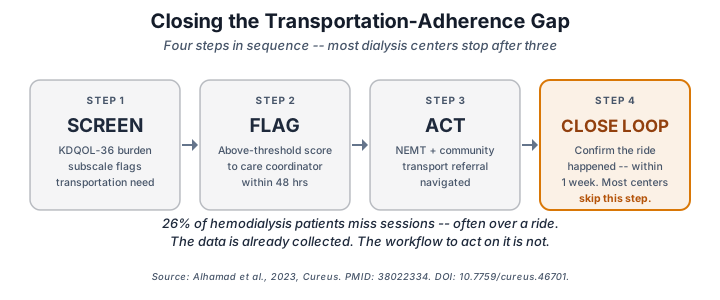
Closing the transportation adherence gap at the dialysis center level requires four things working in sequence:
Screen with a tool that captures transportation need. The KDQOL-36 burden-of-kidney-disease subscale and the CMS SDOH transportation domain together capture whether a patient has transportation barriers. Both instruments are already being administered or required at most centers. The screen exists.
Flag above-threshold results in the care coordination workflow. A score above threshold on the transportation or burden subscales needs to produce a care coordination action, not just a chart notation. The flag needs to reach the social worker or care coordinator, not just the EHR.
Act on the flag with a concrete referral. NEMT coordination, Medicaid transport benefit navigation, community transportation resources, volunteer driver programs through organizations like the American Cancer Society’s Road to Recovery (which sometimes extends to dialysis transport in local markets) — these resources exist but require active navigation. The dialysis social worker is the logical navigator. The referral pathway needs to be operational before the screen is positive, not improvised after.
Close the loop. Did the patient get the ride? Did they make the next session? A closed-loop referral workflow confirms that the resource was accessed, not just offered. Most dialysis center care coordination models do not close the loop.
Methodology note
All outcome statistics are drawn from peer-reviewed nephrology literature and USRDS 2024. No statistics are drawn from non-peer-reviewed sources. Transportation adherence rates cite cross-sectional cohort data (Alhamad et al. 2023). ESRD population statistics cite USRDS 2024 Annual Data Report. Mental health prevalence estimates cite CJASN systematic review (Cohen et al. 2016). TransplantCheck has not yet enrolled clinical tenants; no platform-specific outcome claims are made here.
Founder note
“The KDQOL-36 was being collected at every center I worked with. It sat in the chart. Nobody had a workflow that said: this score is above threshold on transportation burden, therefore someone calls the patient about their ride situation before next session. The gap was not a data problem. It was a workflow problem. I built thirteen dialysis clinic relationships to understand this gap. It is solvable.”
— Matthew Sexton, LCSW, founder of TransplantCheck
What Transportation-Aware Care Coordination Looks Like vs. the Status Quo
| Capability | Status quo (most dialysis centers) | Transportation-aware navigation |
|---|---|---|
| Transportation screening | Ad hoc, if at all | KDQOL-36 burden subscale + CMS SDOH transport domain, systematic |
| Above-threshold flag routing | Chart notation only | Active care coordinator task triggered within 48 hours |
| NEMT benefit navigation | Patient self-navigates or doesn’t | Social worker navigates Medicaid NEMT, community resources, volunteer programs |
| Mental health co-screening | KDQOL-36 MCS rarely triggers referral | PHQ-9 administered when MCS flags; closed-loop referral within 5 business days |
| Session attendance tracking linked to SDOH | Session missed, no SDOH linkage in workflow | Missed session triggers SDOH probe; transportation recheck if prior positive screen |
| Closed-loop confirmation | Referral offered, not confirmed | Resource access confirmed within one week of referral |
Common questions
How often do ESRD patients miss hemodialysis sessions?
A cross-sectional study by Alhamad et al. published in Cureus in 2023 found that approximately 26% of 154 in-center hemodialysis patients missed sessions, with transportation difficulties among the most commonly cited reasons. Family-car access and adequate social support were significantly correlated with better adherence.1 This pattern is broadly consistent with the hemodialysis adherence literature.
What is the KDQOL-36 and why does it matter?
The Kidney Disease Quality of Life 36-item scale is a CMS-required patient-reported outcome measure for in-center hemodialysis facilities. It covers symptom burden, effects on daily life, burden of kidney disease, and physical and mental component summaries. CMS requires collection. Most centers collect and store the data without acting on above-threshold scores. The mental component summary and burden-of-kidney-disease subscales are directly relevant to depression and transportation-related adherence barriers.6
What happens to a dialysis patient who misses sessions?
Missing in-center hemodialysis sessions carries direct medical consequences. Fluid accumulates. Potassium rises rapidly in ESRD patients who produce little or no urine. Hyperkalemia is a life-threatening arrhythmia risk. Two or more missed sessions in a week significantly increase emergency department utilization and hospital admission risk. The USRDS 2024 Annual Data Report tracks hospitalization rates as a core ESRD outcome metric; session nonadherence is consistently associated with elevated hospitalization and mortality risk.2
Is anxiety or depression common in dialysis patients?
Yes. Cohen, Cukor, and Kimmel’s 2016 CJASN review estimated anxiety symptom prevalence in hemodialysis patients at 12% to 52% across studies, consistently exceeding the general population baseline. Anxiety is independently associated with reduced adherence and increased mortality after adjusting for medical comorbidity.3 The Cukor et al. 2014 RCT demonstrated that chairside CBT significantly reduced depression and improved fluid adherence in a randomized controlled trial of 65 hemodialysis patients with comorbid depression.4
What social determinants of health affect dialysis patients most?
Transportation is the most operationally acute SDOH for in-center hemodialysis patients given the three-sessions-per-week schedule. Housing instability, food insecurity, social isolation, and income constraints compound adherence challenges. The CMS SDOH screening measure (introduced as a quality metric in 2024) specifically includes transportation need, housing instability, food insecurity, interpersonal safety, and utility needs. These factors cluster in the dialysis population and are not independent of each other.
Can CBT help dialysis patients adhere to their treatment?
The Cukor et al. 2014 RCT published in JASN showed that chairside CBT delivered in 10 sessions during hemodialysis treatment significantly reduced BDI-II depression scores and improved interdialytic weight gain — a direct measure of fluid adherence — compared with usual care. The chairside delivery model is key: it removes the logistical barrier of a separate mental health appointment for a population already attending three sessions per week.4
About the author
Matthew Sexton, LCSW. Licensed Clinical Social Worker. 13 dialysis clinics. Transplant social work. Founder, TransplantCheck. He writes at the intersection of kidney care, SDOH gaps, and patient navigation infrastructure. All clinical opinions are population-level analysis, not individual clinical advice. matthewsextonlcswpllc.org
If you run a dialysis center or nephrology service line
TransplantCheck is white-label patient-navigation infrastructure for kidney care. KDQOL-36 administration, SDOH screening, transportation referral workflows, and closed-loop follow-up — all under your brand, under your BAA, on existing AWS infrastructure. Tenant deploy in 48 hours.
Book a 30-minute walkthrough →
Important: This post is educational and informational. It is not clinical advice and does not establish a provider-patient relationship. Population-level statistics and system analysis are provided to inform patients, caregivers, and clinicians about documented patterns in the nephrology and ESRD literature. Individual medical decisions should be made in consultation with qualified nephrology and dialysis care professionals. If you are in crisis: call or text 988. Emergency services: 911. NKF Cares helpline: 1-855-NKF-CARES (1-855-653-2273).
Footnotes
-
Alhamad MA, Almulhim MY, Alburayh AA, Alsaad RA, Al Sahlawi M. Factors Affecting Adherence to Hemodialysis Therapy Among Patients With End-Stage Renal Disease Attending In-Center Hemodialysis. Cureus. 2023;15(10):e46701. PMID: 38022334. DOI: 10.7759/cureus.46701 ↩ ↩2 ↩3
-
United States Renal Data System. 2024 USRDS Annual Data Report: Epidemiology of Kidney Disease in the United States. National Institutes of Health, NIDDK. usrds-adr.niddk.nih.gov/2024 ↩ ↩2 ↩3 ↩4
-
Cohen SD, Cukor D, Kimmel PL. Anxiety in patients treated with hemodialysis. Clinical Journal of the American Society of Nephrology. 2016;11(12):2250-2255. PMID: 27660303. DOI: 10.2215/CJN.02590316 ↩ ↩2 ↩3
-
Cukor D, Rosenthal Ver Halen D, Asher DR, et al. Psychosocial intervention improves depression, quality of life, and fluid adherence in hemodialysis. Journal of the American Society of Nephrology. 2014;25(1):196-206. PMID: 24309187. DOI: 10.1681/ASN.2012111134 ↩ ↩2 ↩3 ↩4 ↩5
-
McPherson LJ, Pastan SO, Mohan S, et al. Distance to kidney transplant center and access to early steps in the kidney transplantation process in the southeastern United States. Clinical Journal of the American Society of Nephrology. 2020;15(4):539-547. PMID: 31992572. DOI: 10.2215/CJN.08530719 ↩ ↩2
-
Chen JY, Wan EYF, Tabara K, et al. Validity and reliability of the Chinese Kidney Disease Quality of Life (KDQOL-36) instrument in Hong Kong Chinese patients. Health and Quality of Life Outcomes. 2016;14(1):81. PMID: 27245707. DOI: 10.1186/s12955-016-0479-z ↩ ↩2
-
Ladin K, Daniels A, Osani M, Bannuru RR. Is social support associated with post-transplant medication adherence and outcomes? A systematic review and meta-analysis. Transplantation Reviews. 2018;32(1):16-28. PMID: 28495070. DOI: 10.1016/j.trre.2017.04.001 ↩
-
Berkowitz SA, Hulberg AC, Standish S, Reznor G, Atlas SJ. Addressing unmet basic resource needs as part of chronic cardiometabolic disease management. JAMA Internal Medicine. 2017;177(2):244-252. PMID: 27919115. DOI: 10.1001/jamainternmed.2016.6221 ↩
Frequently asked questions.
- How often do ESRD patients miss hemodialysis sessions?
- A cross-sectional study by Alhamad et al. published in Cureus in 2023 found that approximately 26% of 154 in-center hemodialysis patients missed sessions, with transportation difficulties among the most commonly cited reasons. Family-car access and adequate social support were significantly correlated with better adherence. This pattern is broadly consistent with the hemodialysis adherence literature.
- What is the KDQOL-36 and why does it matter?
- The Kidney Disease Quality of Life 36-item scale is a CMS-required patient-reported outcome measure for in-center hemodialysis facilities. It covers symptom burden, effects on daily life, burden of kidney disease, and physical and mental component summaries. CMS requires collection. Most centers collect and store the data without acting on above-threshold scores. The mental component summary and burden-of-kidney-disease subscales are directly relevant to depression and transportation-related adherence barriers.
- What happens to a dialysis patient who misses sessions?
- Missing in-center hemodialysis sessions carries direct medical consequences. Fluid accumulates. Potassium rises rapidly in ESRD patients who produce little or no urine. Hyperkalemia is a life-threatening arrhythmia risk. Two or more missed sessions in a week significantly increase emergency department utilization and hospital admission risk. The USRDS 2024 Annual Data Report tracks hospitalization rates as a core ESRD outcome metric; session nonadherence is consistently associated with elevated hospitalization and mortality risk.
- Is anxiety or depression common in dialysis patients?
- Yes. Cohen, Cukor, and Kimmel's 2016 CJASN review estimated anxiety symptom prevalence in hemodialysis patients at 12% to 52% across studies, consistently exceeding the general population baseline. Anxiety is independently associated with reduced adherence and increased mortality after adjusting for medical comorbidity. The Cukor et al. 2014 RCT demonstrated that chairside CBT significantly reduced depression and improved fluid adherence in a randomized controlled trial of 65 hemodialysis patients with comorbid depression.
- What social determinants of health affect dialysis patients most?
- Transportation is the most operationally acute SDOH for in-center hemodialysis patients given the three-sessions-per-week schedule. Housing instability, food insecurity, social isolation, and income constraints compound adherence challenges. The CMS SDOH screening measure (introduced as a quality metric in 2024) specifically includes transportation need, housing instability, food insecurity, interpersonal safety, and utility needs. These factors cluster in the dialysis population and are not independent of each other.
- Can CBT help dialysis patients adhere to their treatment?
- The Cukor et al. 2014 RCT published in JASN showed that chairside CBT delivered in 10 sessions during hemodialysis treatment significantly reduced BDI-II depression scores and improved interdialytic weight gain -- a direct measure of fluid adherence -- compared with usual care. The chairside delivery model is key: it removes the logistical barrier of a separate mental health appointment for a population already attending three sessions per week.
Want to discuss this for your program?
Book a 30-min conversation. We'll walk you through deployment, the BAA, and what your rollout looks like in production.
Book a 30-min conversation